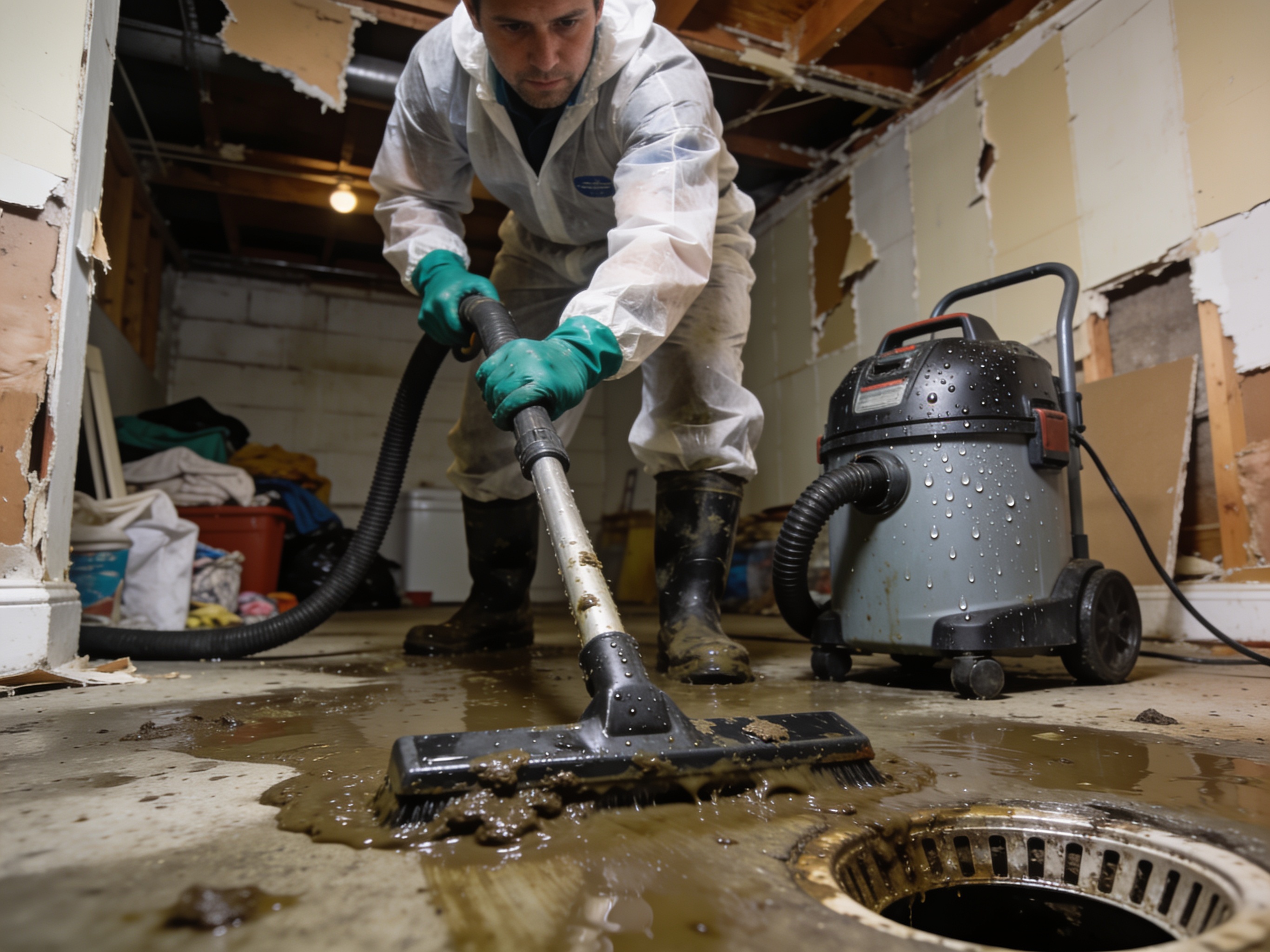
Sewage backups in Littleton often stem from older cast-iron lines in Historic Littleton homes built before the 1970s, where tree roots from Sterne Park and Hudson Gardens infiltrate joints during spring thaws. Semi-arid conditions with low humidity and four distinct seasons allow moisture to evaporate quickly on surfaces while trapping contamination inside wall cavities and under concrete slabs common in Bowles and Columbine neighborhoods. Proper remediation requires negative air machines and EPA-registered disinfectants to address pathogens before they aerosolize in dry air.
Arapahoe County properties near Southpark and Wolhurst face additional risks from heavy summer downpours overwhelming municipal lines tied to Littleton Town Hall infrastructure. Crews must navigate finished basements with carpet and drywall that absorb waste quickly, then remove and dispose of saturated materials at permitted facilities rather than standard landfills. Failure to extract standing water within hours allows bacteria to migrate into HVAC systems, especially in low-humidity winters when forced-air heat spreads particulates.
Work near Bemis Public Library and the Littleton Museum requires coordination with local codes on wastewater discharge and odor control to avoid impacting nearby residents. Technicians test pH and ammonia levels on-site before applying antimicrobial agents, then document moisture readings with infrared cameras to confirm hidden pockets are addressed. This approach prevents repeat calls from homeowners who discover lingering issues months after initial cleanup.
Technician insight
In Littleton, the thing that catches most people out with sewage backup cleanup is how our semi-arid climate and low humidity let surface water disappear fast in older Historic Littleton basements while leaving hidden saturation behind drywall and under slabs near the foundation.
Sewage Backup After Spring Rains in Columbine
A homeowner in Columbine contacted us after heavy April rains pushed sewage into a finished basement through an old line. We found waste had wicked into carpet padding and lower drywall near the exterior wall. Extraction, targeted demolition, and disinfection cleared the space, allowing the family to return without lingering odors or health concerns.
Sewage Backup Cleanup Services We Offer
✓Basement Sewage Extraction
Removes contaminated water and solids from flooded basements in older Littleton homes, followed by disinfection to protect concrete and framing.
✓Toilet Overflow Remediation
Handles sudden overflows from clogged lines common in Historic Littleton properties, including carpet removal and subfloor treatment.
✓Sump Pump Failure Cleanup
Addresses backups when pumps fail during spring rains in neighborhoods like Columbine and Bowles, restoring dry conditions before mold sets in.
✓Kitchen Drain Backup Removal
Extracts grease and waste from kitchen lines that back up into living spaces, with full sanitization of affected cabinetry and flooring.
✓Post-Storm Biohazard Decontamination
Cleans sewage introduced by heavy seasonal storms affecting homes near Southpark and Wolhurst, preventing cross-contamination to adjacent rooms.
How it works
- 1
Initial Assessment
Technicians arrive within hours, inspect the source, test contamination levels, and map affected zones in the property.
- 2
Waste Extraction
Remove standing sewage and solids using industrial pumps and containment to prevent spread into clean areas.
- 3
Deep Cleaning And Disinfection
Apply EPA-approved agents to all surfaces, remove porous materials, and treat hard surfaces for pathogen elimination.
- 4
Drying And Verification
Deploy air movers and dehumidifiers, then confirm moisture levels meet standards before final clearance.
Pricing
Costs depend on volume of waste, square footage affected, and materials removed; upfront quotes provided after assessment.