2026-09-28 ·
Littleton Regulations Affecting Hoarding Property Cleanup
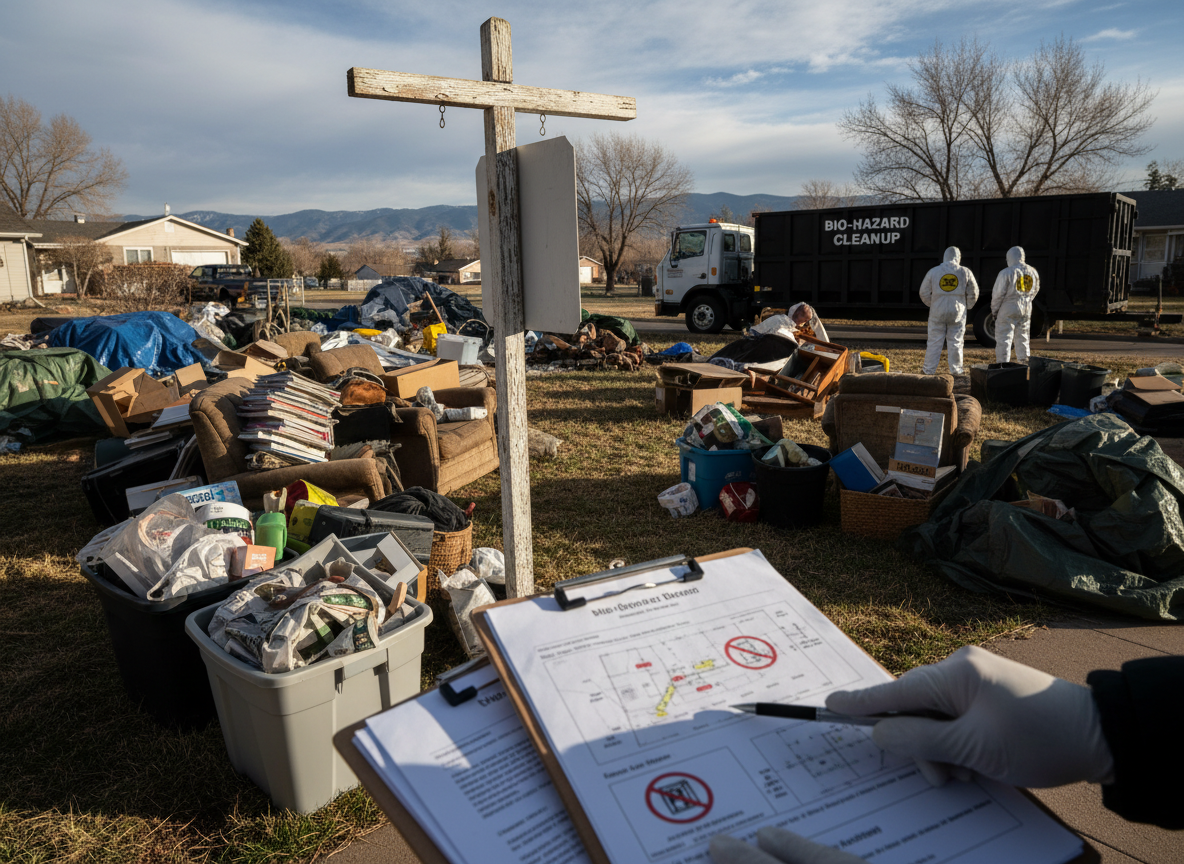
Littleton hoarding cleanups fall under Arapahoe County environmental health standards that require licensed handling of biohazard materials and proper notification to county inspectors before large-scale removal begins in neighborhoods such as Historic Littleton or Downtown Littleton.
Arapahoe County Health Department Rules
Arapahoe County enforces health codes that treat accumulated waste in hoarded homes as potential biohazards, especially when sewage or animal waste is present. Crews must separate regulated medical waste from general debris and transport it to approved facilities rather than standard landfills. In older housing stock common to Columbine and Wolhurst, inspectors often require documentation of decontamination steps before utilities can be restored. These rules extend to nearby Englewood and Denver properties when cross-jurisdiction issues arise. Property owners in Southpark frequently face additional reviews when homes sit near irrigation ditches that can spread contaminants during heavy spring runoff. Compliance keeps projects from stalling when county officials conduct follow-up visits.
Littleton City Property Maintenance Ordinances
Littleton city code requires owners to address exterior and interior conditions that affect neighboring properties, including excessive clutter visible from streets in areas like Bowles and Sterne Park. When hoarding reaches levels that block exits or create fire hazards, the city can issue abatement orders that reference county health guidelines. Historic Littleton homes built before 1960 often contain lead paint and outdated plumbing, which changes how crews package and label debris for disposal. Violations in these districts can trigger liens if cleanup does not meet ordinance timelines. Coordination with the Littleton Town Hall planning department helps crews schedule work around permit inspections without delaying the removal process.
Seasonal and Climate Effects on Regulated Work
Littleton's semi-arid climate with four distinct seasons and low humidity influences how long biohazard materials can remain on site before county rules require removal. Dry winter air can aerosolize dust from long-term hoards, prompting inspectors to mandate negative-air machines during winter months. Spring snowmelt in Highlands Ranch and nearby foothills increases moisture in basements, raising the chance that mold mixed with hoarded items falls under stricter sewage backup cleanup protocols. Crews working in Sterne Park or near Hudson Gardens must account for wind that can carry odors or particles to adjacent properties, sometimes requiring temporary barriers approved by local health officials.
Practical Steps for Compliance
Start by contacting Arapahoe County Environmental Health to confirm whether the property needs a waste manifest. Document every layer of removal with photos that satisfy both city and county inspectors. When properties involve multiple units or shared walls in Downtown Littleton, notify adjacent owners as required by nuisance ordinances. Link to detailed preparation guidance in the article Safety Steps For Starting Hoarding Cleanup In Littleton Homes and review Biohazard Identification In Long Term Hoarded Littleton Homes for material classification. For full service details see the hoarding cleanup page. Properties in Historic Littleton may also reference area-specific procedures at Bio Hazard Cleanup in Historic Littleton. Teams available 24/7 can align schedules with county inspection windows to avoid delays.