2026-09-28 ·
Biohazard Identification In Long Term Hoarded Littleton Homes
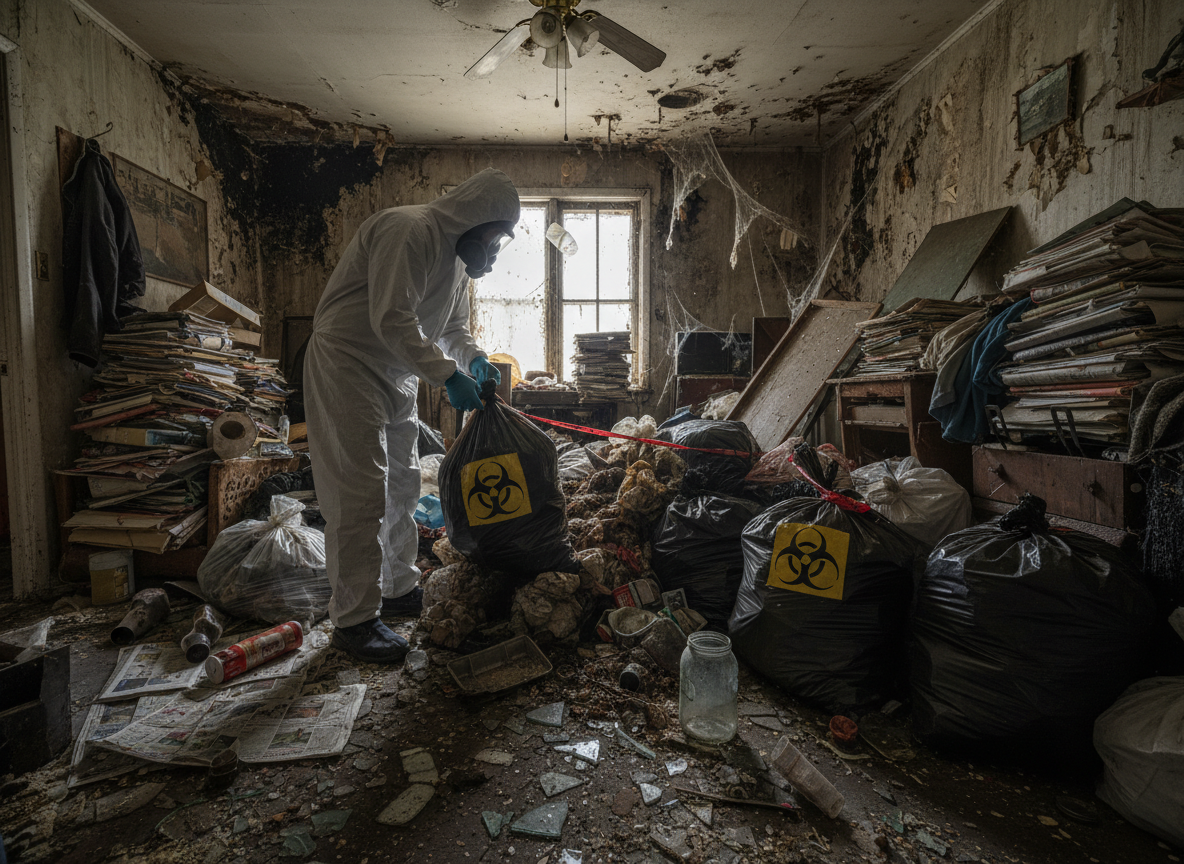
Biohazards in long-term hoarded Littleton homes most often include hidden mold colonies, dried feces and urine layers, and sewage residues that develop when plumbing fails under piled debris. These form over years in homes built before 1980 across neighborhoods like Columbine and Bowles, where basements and crawl spaces trap humidity despite the region's low overall moisture.
Common Biohazards in Long-Term Hoarded Littleton Properties
Hoarded homes in Historic Littleton and Downtown Littleton frequently show black mold growth on drywall and insulation once stacks block airflow for several winters. Animal waste from rodents or cats creates concentrated ammonia pockets that linger in low-humidity summers, while human feces and urine soak into subfloors in multi-story houses common near Littleton Town Hall. Sewage backup from clogged lines adds fecal coliforms that spread through carpet pads in homes near Sterne Park. These materials stay viable because the four distinct seasons allow freeze-thaw cycles to push contaminants deeper into wood framing without fully drying them. Visible indicators include dark staining along baseboards, strong ammonia odors near closets, and soft spots in flooring that give under foot traffic.
Climate and Housing Factors That Change Biohazard Development
Littleton's semi-arid air with low humidity normally slows bacterial growth, yet winter snowmelt and spring rains create short windows of trapped moisture inside packed homes. Properties in Wolhurst and Southpark often feature older ranch styles with slab foundations that hold water against hoarded items for weeks. Four-season temperature swings expand and contract pipes, leading to slow leaks that mix with paper and fabric piles to form persistent mold. Homes near Hudson Gardens and Bemis Public Library sit on lots with slight slopes that direct runoff toward foundations, increasing the chance of sewage mixing with household waste. These conditions turn ordinary clutter into active biohazard zones faster than in drier Front Range spots.
Distinguishing Sewage Backup from Other Waste in Hoarded Homes
Sewage backup in hoarded Littleton homes shows distinct black water lines on walls and a sulfur smell that differs from pet waste odors. In areas like Bowles and Columbine, older sewer laterals crack under root pressure, allowing effluent to rise through floor drains blocked by stored items. Check for greasy residue on lower walls and toilet backups that coincide with heavy rain. Unlike scattered animal droppings, sewage leaves uniform staining across multiple rooms and introduces pathogens that survive in the dry climate once embedded in carpet. sewage backup cleanup addresses these specific residues after identification confirms the source.
Safe Identification Steps Before Any Cleanup Begins
Start at the exterior and note foundation cracks or standing water near the home in neighborhoods such as Sterne Park. Inside, use a flashlight to scan for discoloration without moving items, and document odors room by room. Wear an N95 mask and gloves when testing small areas for softness in flooring. Record locations of potential sharps or needles mixed into piles. Safety Steps For Starting Hoarding Cleanup In Littleton Homes outlines protective sequencing that matches these conditions. Avoid opening sealed containers until ventilation is established.
When Professional Assessment Becomes Necessary
Persistent odors after basic ventilation or visible mold covering more than a few square feet signals the need for trained assessment in Arapahoe County homes. Properties near Englewood or Highlands Ranch with multi-year accumulation often require coordinated removal of both solid waste and liquid residues. hoarding cleanup teams familiar with local housing stock can map contamination zones without disturbing structural elements. Littleton Regulations Affecting Hoarding Property Cleanup covers county notification steps that apply once biohazards are confirmed. Contact is available 24/7 for situations where health symptoms appear in occupants.